The FWD #279 • 930 words
The company whose platform has spent a decade turning homes into hotel rooms just pledged $250 million to help build new ones.
Picture an apartment project with its rezoning approved, its permits issued, and its tax credits awarded. It’s still a gravel lot, because the financing is a few million dollars short. Research commissioned by Airbnb estimates about 750,000 multifamily homes across the country are stuck in that exact spot.
On September 14, Airbnb launched the Airbnb Housing Accelerator to go after them. The package has four parts:
- $250 million in “last-dollar” financing for construction-ready rental projects, at below-market returns, recycled into new deals as each one closes. Airbnb expects it to unlock about $5 billion in development over 10 years.
- Funding for local advocates working on zoning, permitting, and building code reform, including: AURA in Austin, the Florida Housing Coalition, CHAPA in Massachusetts, and the Housing Action Coalition in California.
- Creating The Airbnb City Index, an open-source dataset on what cities are actually building, aimed at journalists, researchers, and policymakers.
- A $5 million Housing Innovation Prize, split into five $1 million awards for technologies that make homebuilding faster and cheaper.
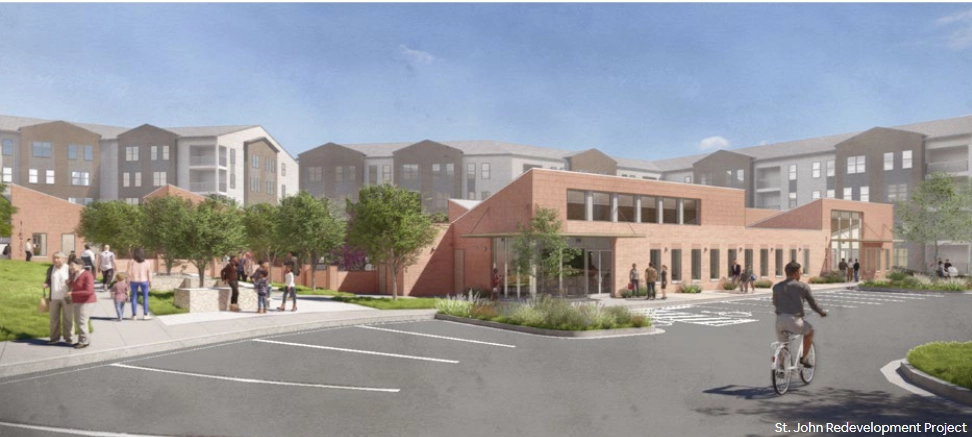
The first deal financed is $6.4 million toward 201 income-restricted homes in Austin’s St. John neighborhood, on a site residents spent two decades fighting to redevelop.
The Case For Cash
Gap financing is one of the least glamorous but most useful tools in housing. A Low-Income Housing Tax Credit (LIHTC) deal can line up equity, bank debt, and local subsidy and still fall short after construction costs or interest rates jump. A small, patient check at the end of the line can get the whole capital stack moving. That’s the bet here: every Airbnb dollar helps move about $20 of total development ($250 million against $5 billion).
How far does $250 million go? In Austin, Airbnb put in $6.4 million for 201 homes, or about $31,800 per home. At that rate, the full $250 million covers about 7,800 homes before any money gets recycled into new deals. Airbnb’s own research counts 750,000 stalled homes nationwide. So the first round reaches about 1 in every 100 of them.
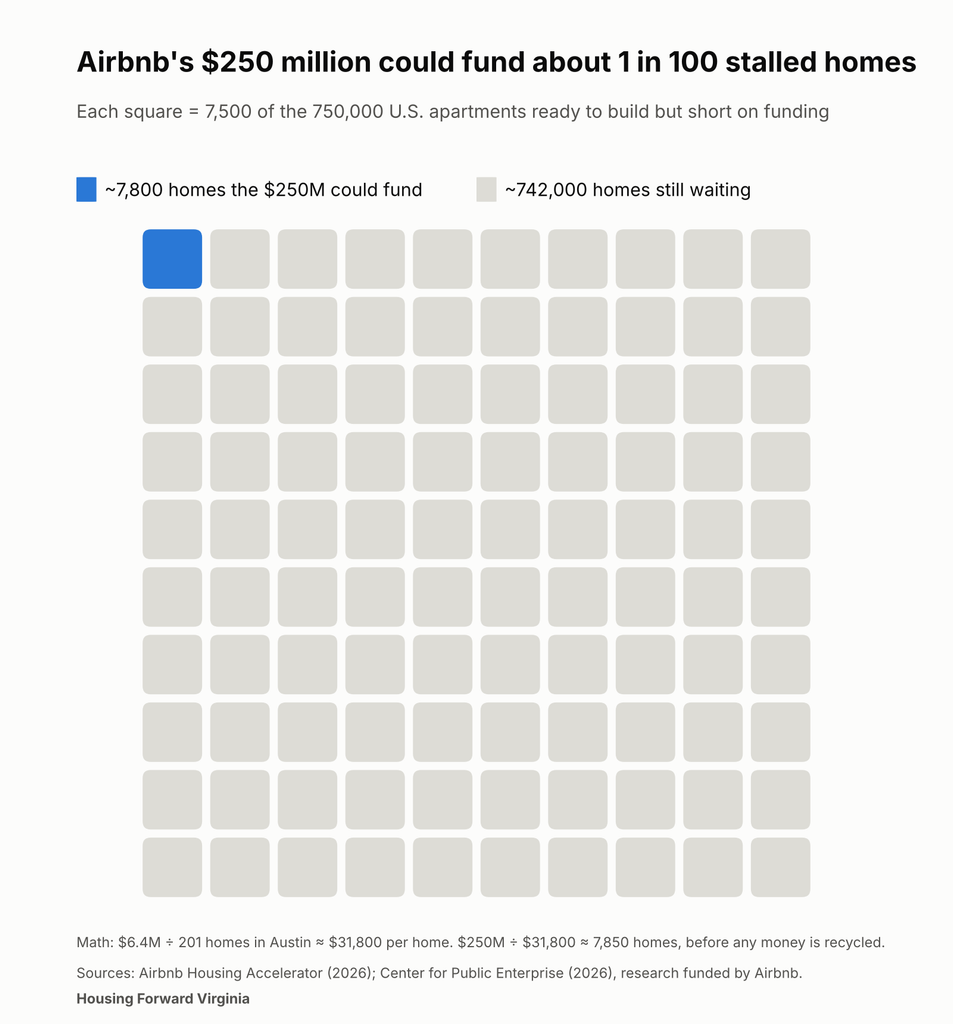
Recycling could stretch that over the decade, and 7,800 homes is 7,800 families housed. But the gap remains wide.
The advocacy money may stretch further. Rules that block apartments cost more homes than any single financing gap. In Virginia’s suburbs, apartments are allowed by right on just 1% of residential land, according to the National Zoning Atlas. Groups pushing zoning reform know how far a few staff positions and a good dataset can go.
The Short-Term Rental Ledger
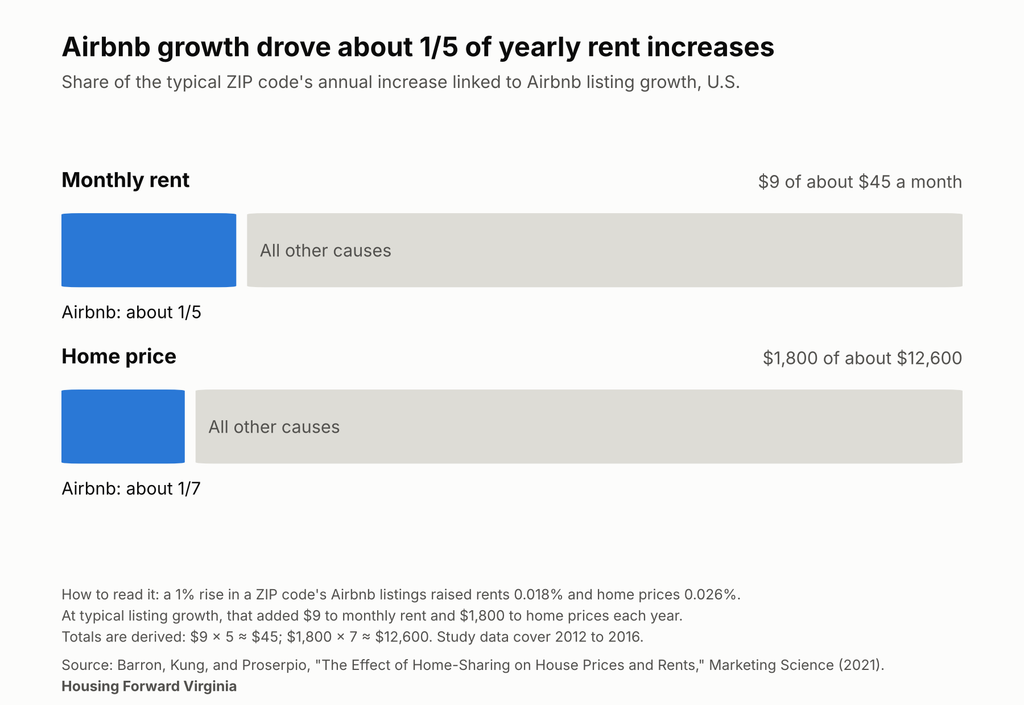
Then there’s the other side of the balance sheet. The most cited national study, published in Marketing Science, found that a 1% increase in Airbnb listings raised local rents by 0.018% and home prices by 0.026%. Those numbers look tiny until you remember how fast listings grew. The authors estimated Airbnb’s expansion accounted for about one-fifth of annual rent growth and one-seventh of price growth in the typical ZIP code they studied.
The mechanism matters more than the percentages. Airbnb didn’t shrink the total housing supply, but rather shifted homes from long-term leases into short-term stays. The effect was strongest in ZIP codes where fewer homes were owner-occupied.
Virginia has felt that shift unevenly. Danville saw short-term rental listings jump more than 800% in three years, according to AirDNA data reported by WHRO. Virginia Beach has well over 2,000 listings. Hampton paused new permits in 2023, counties around Lake Anna drafted occupancy limits, and Portsmouth is now weighing a density cap. Arlington and Herndon only allow short-term rentals in a host’s primary residence.
Two important caveats prevent any easy conclusions. First, the effect is modest and local. When New York City effectively banned most short-term rentals in 2023, listings dropped by roughly 90%, and rents kept climbing anyway. Banning Airbnb doesn’t build homes. Second, much of the research Airbnb cites (including the 750,000-unit estimate and several of the New York analyses) was commissioned or funded by Airbnb. That doesn’t make it wrong, but readers should weigh it accordingly.
What It Means for Virginia
The money may not reach places most impacted by short-term rentals. The accelerator only funds U.S. projects with 100 or more units. That could rule out most deals in the small towns, lake communities, and mountain counties where short-term rentals compete hardest with year-round residents. A 40-unit workforce project in the Shenandoah Valley, for example, won’t qualify.
No Virginia partners yet. All four advocacy grantees work outside the Commonwealth, with no new confirmed partners in this state. Virginia’s 2026 zoning reforms and the Virginia Zoning Atlas give the company plenty to build on here, however.
ADUs are the next test. Localities must allow accessory dwelling units in single-family zones by July 1, 2027. Whether those new units can be listed as short-term rentals is still a local decision, and it’ll shape how many become homes for residents. Herndon, for example, already prohibits short-term rentals in ADUs.
Have a stalled project?
Developers with a construction-ready multifamily project of 100+ units can submit it to the Housing Accelerator. If you’re a Virginia developer who applies, let us know. We’d like to track where the money lands.Airbnb says there’s no single fix, and on that point the research agrees. The accelerator adds homes at the margin, while local short-term rental rules protect the homes already standing. Virginia’s localities will need both, and the 2027 ADU rollout is a good place to find out whether they can manage it.