THE FWD #270 • 520 words
A 1915 rent strike led by Scottish women still shapes UK housing today—and offers a lesson worth remembering.
If you’ve been charmed by the jovial, lovable Scots as they celebrate the World Cup on American soil, allow me to add to the Scot content on your feed with a little walk through housing history.
During a recent family trip to the country we learned about a famous rent strike in 1915 led by the women of Glasgow. The Glasgow rent strikes, which led to the historic Rent Restriction Act of 1915, which still impacts the UK housing market today. Housing enthusiasts as we are, we had to know more.
From 1912-1915 Glasgow, Scotland’s largest City, saw 70,000 new residents due to industrialization and a boost in wartime ship building. By 1911, half of all Scottish families lived in tight quarters – units of one or two bedrooms – while in England and Wales only seven percent of families lived in units this small. Conditions were grim.
Meanwhile, World War I began in 1914. Landlords used the constrained housing supply and wartime economic austerity to increase rents and neglect maintenance or repairs. In the Govan neighborhood in particular, rents increased in 1915 by 11 – 23% on almost every renter. Papers reported scandalous evictions of war widows and the poor, agitating Glasweigans to do something to resist.
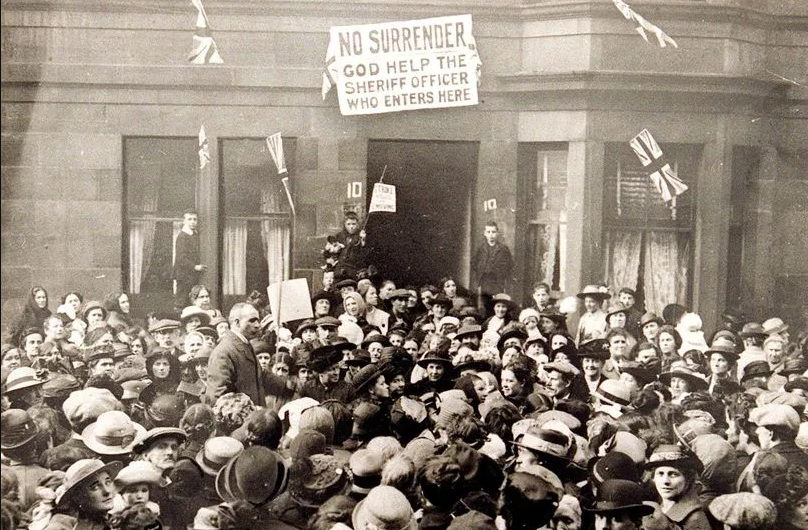
Rent strikes, led by women, were organized. 20,000 strikers strong, the protestors marched from their neighborhoods down to the shipyards, pulled the ship builders out of work and continued marching. In addition to striking, women took turns standing guard outside of apartment buildings physically blocking evictors and debt collectors. They built “bombs” made of flour to throw at landlord staff and occasionally pants’ed them. On occasion, they would go to a debt collectors house and demand they return the money collected. In every window a sign read “We are not removing”.
All that bluster worked. In the middle of a war, when politicians wanted everyone focused on building weapons, the pressure won them over. The Rent Restriction Act froze rents for the duration of the war—a form of rent control that was renewed on certain housing all the way into the 1980s. It reshaped the entire private rental market. In 1915, nine out of ten homes in the UK were privately rented; by 1991, that figure had fallen to one in ten. The Act finally expired in the late ’80s, and the private rental market has grown large again ever since.
A century later, the lesson holds: housing policy is rarely written in quiet rooms—it’s shaped by the people willing to hang a sign in the window and refuse to budge.