FWD #257 • 909 words
Modular, Factory Built Housing in Practice
Factory-built housing has the potential to positively impact affordability and workforce development throughout Virginia, promising faster timelines and cost savings—but what’s it actually like to build with it? We sat down with Nicole Storm of project:HOMES and Sarah Foote of Fauquier Habitat for Humanity to find out what they’ve learned from their experiences.
project:HOMES
Nicole Storm, Senior Director of Advancement
Since 2015, project:HOMES has completed seven single family modular homeownership projects in Richmond, Virginia, including a number of shipping container conversions.
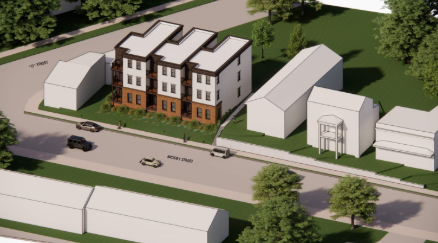
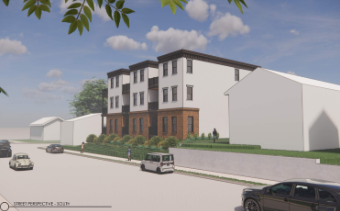
project:HOMES is currently working on their first rental modular project: a three-story, nine-unit modular building under construction on Mosby Street in Richmond’s East End. Once complete, the building will be sold to local nonprofit housing provider Urban Hope and will be operated as low-income rental housing. This may be the first modular multifamily project in Virginia.
Once complete, this modular rental could house 9 to 18 people with Urban Hope; adding to the roughly 11 already housed through project:HOMES’ original factory-built projects.
project:HOMES’ willingness to break into the unknown has helped them attract funding from both government and private sources. In particular, Virginia Housing’s Innovation Grant Program has allowed project:HOMES to deploy the resources to continue testing new construction types while serving those that need it.
Their experiences with both factory built and traditional construction methods has taught them to recognize that some sites are better suited for modular housing than others. Modular home building requires early coordination, strong partnerships with manufacturers, and sites that truly fit the modular delivery model.
Despite the rumors, modular is not a silver bullet for cost savings—at least not yet. Traditional site-built housing continue to be the most cost effective form of affordable development for project:HOMES, but they would still encourage others to go into modular and factory built development with realistic expectations. The big piece of advice: go in expecting to learn. The iteration is the innovation.
Fauquier Habitat for Humanity
Sarah Foote, Director of Engagement and Development
Fauquier Habitat for Humanity (FHFH) recently utilized modular construction for the first time on Haiti (pronounced hay-tie) Street in historic Warrenton, Virginia. Following the Habitat for Humanity model, these modular homes are affordable homeownership opportunities for FHFH homebuyers. The Haiti project comprises a mix of modular unit types, with standalone one bedrooms, a duplex, and even a triplex.
The flexibility of factory-built housing models within the local zoning allowed Fauquier Habitat to gently increase neighborhood density, putting four units where only one stood previously. This approach prevented them from needing to widen roads, add extra parking spaces, or cut down tree-cover. This infill development has resulted in opening more doors to homeownership than the Haiti neighborhood previously offered—with their first modular family moving in by March 2026. Fauquier Habitat will house 13 families on the street through this project (approximately 30 people).
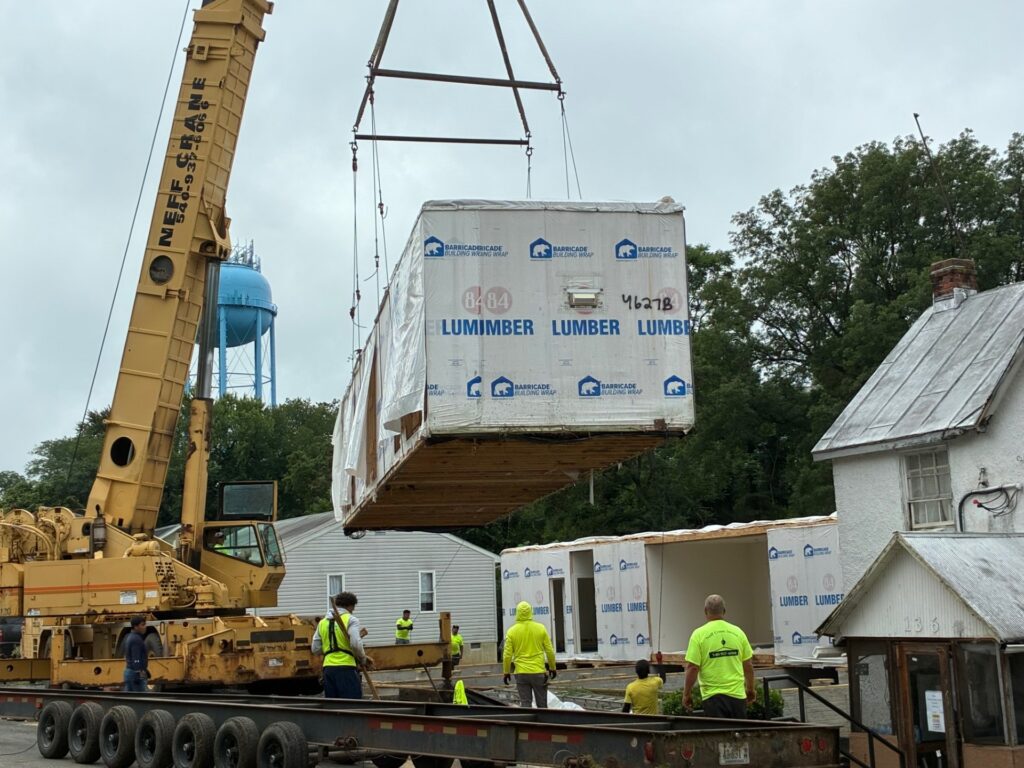
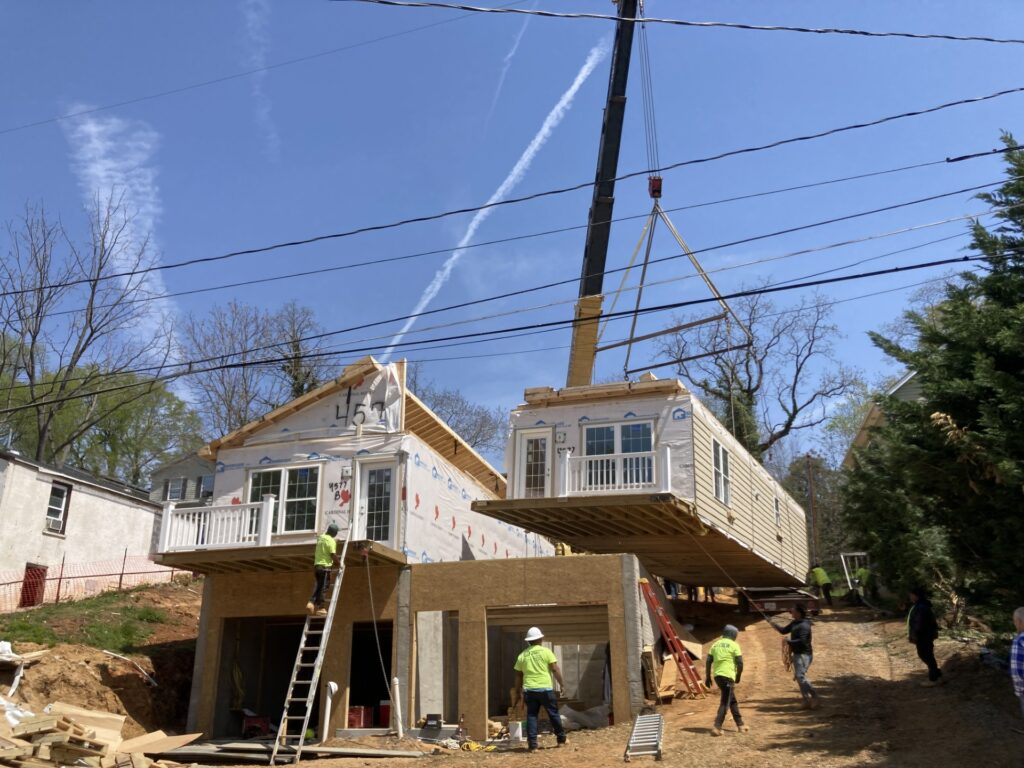
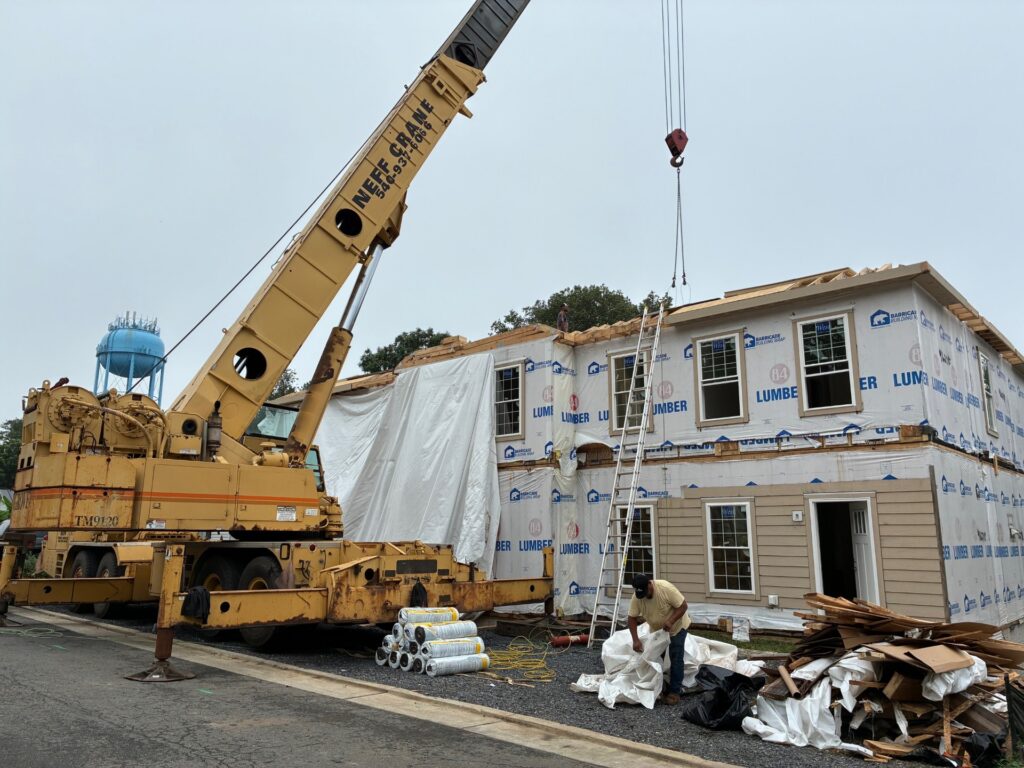
Haiti Street taught Fauquier Habitat something manufacturer’s manuals might not cover: site conditions are everything. The street is narrow and one-way—a challenge for ordinary construction vehicles, let alone the crane required to set modular units onto their foundations. Angling homes up a steep grade took hours, and more than a few wooden pallets didn’t survive the process.
That’s the job of the “set crew”—the specialized team that physically places and installs modular units. It’s easy to underestimate how much of the work happens on delivery day, and how much depends on conditions outside anyone’s control.
Working through those constraints didn’t discourage Fauquier Habitat. If anything, it widened their aperture. Panelization, mass timber, 3D printing—factory-built housing turned out to be a doorway, not a destination.
Advice for First-Timers
Before setting foot on a modular project, get the lingo straight. “Modular” and “manufactured” housing follow different code regulations, and the public—including funders and local officials—often conflates them. Getting ahead of that confusion protects your project and your credibility.
For more information on the differences between modular and manufactured homes, see Consumers FAQs from the Virginia Manufactured and Modular Housing Association and Modular vs. Manufactured Homes from the International Association of Certified Home Inspectors.
Site selection matters more than most people expect. Haiti Street’s steep grade made the crane work extraordinarily difficult, and in hindsight, a flatter site would have been the better fit for modular delivery. Not every lot is the right lot.
Plan for the set crew’s constraints early. There are very few qualified set crews in Virginia, which means weather delays don’t just push your schedule back—they ripple through every project behind yours. Build a weather contingency clause into your contract, and budget at least three days for the setting process depending on unit count and type.
Quality control starts at the factory, not on-site. Visit the manufacturing facility before delivery and bring a licensed, third-party Class A contractor to review the homes there. Any discrepancies caught at the factory cost far less to fix than ones discovered after the crane has done its job.
Modular isn’t a silver bullet—but it opened doors Fauquier Habitat didn’t expect. Working through the challenges on Haiti Street sparked curiosity about what else is possible: panelization, mass timber, 3D printing. Sometimes the best outcome of trying something new is knowing you’re ready to try something else.