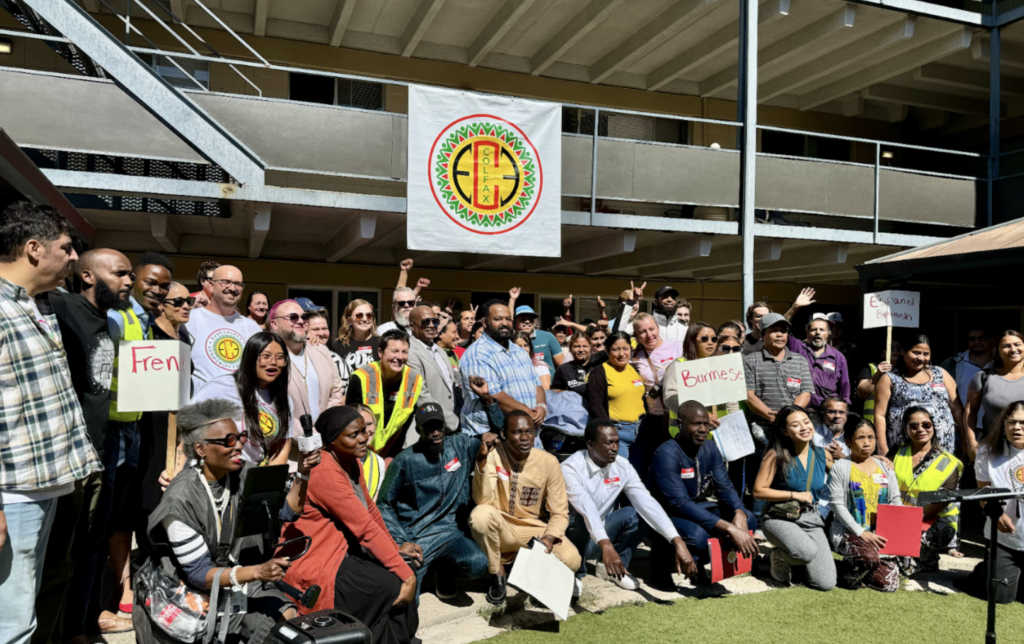
Image: East Colfax Neighborhood Trust, CO
FWD #262 • 341 words
Can the Community be its own Landlord? Meet the MINT Model
A new structure called a Mixed Income Neighborhood Trust (MINT) is charting a different path — one where residents share in the prosperity they help create rather than being pushed out by it. Unlike Community Land Trusts, which focus on individual properties, MINTs operate across an entire portfolio of buildings.
How It Works
MINTs are portfolios of community-governed rental housing designed to preserve affordability at the neighborhood scale. Trust Neighborhoods founded the model in 2020. The MINT owns multiple buildings and commercial spaces, using cross-subsidy between market-rate and affordable units to stay financially stable without relying on scarce per-unit subsidies.
Governance centers on a “Trust Stewardship Committee” of neighborhood organizations, residents, and local stakeholders, who define the trust’s purpose and elect its operating board. MINTs typically target communities with large nonwhite and immigrant populations and older, often poorly maintained housing stock — known as naturally occurring affordable housing (NOAH).
Kansas City’s Lykins neighborhood launched Northeast Neighborhood Trust in 2021. The area had a median income of about $24,000 and a predominantly Latino, Southeast Asian, and East African population. Today, the trust owns 20 residential properties and one commercial space.
Beyond Housing
When properties become available, current residents — especially those at risk of displacement — get first priority. Investment dollars stay in the neighborhood rather than flowing to distant landlords.
The Kansas City model also manages commercial space, supports local businesses, and coordinates services like financial counseling and homeownership preparation.
A Model Worth Watching
MINTs aren’t a silver bullet. They require significant upfront capital. East Boston Neighborhood Trust raised $54M to acquire 114 units in 2022 — a high bar. Governance is genuinely hard: balancing accountability to residents, funders, and a housing mission involves real tradeoffs. Who decides which properties to acquire? Who gets the affordable units?
Still, traditional affordable housing development often produces isolated pockets of affordability in neighborhoods where market pressure keeps climbing. MINTs offer something different: stability at the neighborhood scale. That’s worth watching.
Want to learn more about innovative affordable housing models? Check out our Sourcebook for Virginia-specific data and resources.