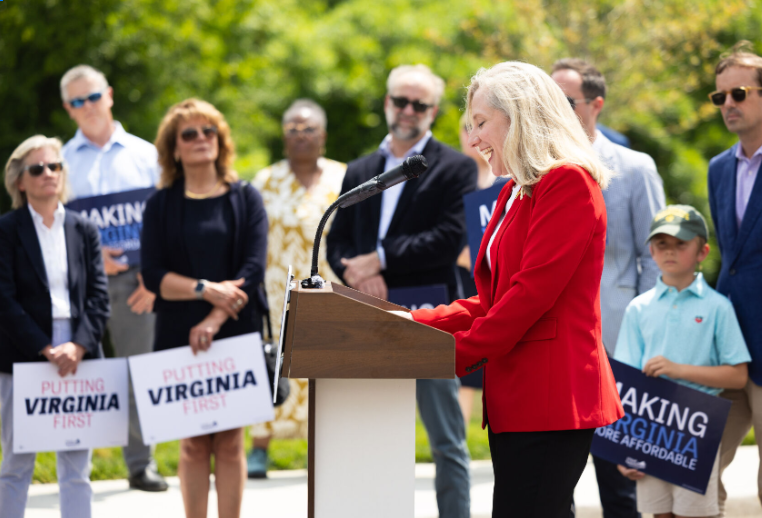
Image source: Mike Kropf/ Richmond Times-Dispatch via AP
TWD #247: Word Count: 955
New executive order targets regulatory barriers and establishes commission to boost housing production across Virginia
On her first day in office, Governor Abigail Spanberger signed ten executive orders addressing many of the key themes from her campaign. The first three of these orders focus on affordability, which anchored her pitch to voters throughout the Commonwealth, and reveal how the new administration will try to deliver on promises to reduce costs for Virginians. Most notably for us, housing didn’t just get a passing mention—it got top billing.
A Comprehensive Approach to Lower Costs
Executive Order 1 puts affordability front and center. It directs state agencies to identify ways to “readily reduce costs” for Virginians on housing, healthcare, energy, education, childcare, and other living expenses. Reports with recommended actions are due in 90 days, and may include anything from bureaucratic tweaks to new legislative proposals. The second EO forms a new “Interagency Health Financing Task Force” to mitigate rising healthcare costs, particularly in the context of Medicaid cuts and expiration of ACA premium subsidies.
What’s in the Housing Executive Order
Executive Order 3 targets housing affordability specifically, and builds on the Governor’s directives in EO 1. The order outlines a two-pronged approach to active a whole-of-government approach to increase supply and lower costs.
First, it requires six state agencies—including the Department of Housing and Community Development, Department of Environmental Quality, Department of Transportation, Department of Wildlife Resources, Department of Conservation and Recreation, and Department of Historic Resources—to conduct comprehensive reviews of regulations affecting housing development. These agencies have 90 days to identify duplicative requirements, outdated rules, and permitting bottlenecks that drive up costs without improving safety or quality.
The reviews must address some specific questions: Which regulations should be amended or repealed? How can permit review processes be streamlined? What coordination improvements would increase predictability? Agencies are asked to estimate time savings, and to clarify whether changes require statutory amendments or can happen administratively.
Second, the order creates a new “Commission on Unlocking Housing Production” chaired by the Secretary of Commerce and Trade. This commission will meet regularly and report every six months on housing production barriers, with the power to recommend legislative, regulatory, and administrative changes. By including representatives from local government and industry alongside state agencies like Virginia Economic Development Partnership, Virginia Department of Education, and the Virginia Resources Authority, Spanberger is attempting to align solutions reflect real-world challenges facing developers and communities.
Learning from Others
Virginia isn’t alone in taking this approach. Massachusetts established its own Unlocking Housing Production Commission in January 2024, bringing together housing policy experts, civic leaders, local officials, and labor representatives. That commission released its report last month with over 50 recommendations addressing economic incentives, workforce development, land use and zoning practices, streamlining regulations, and improving state-local coordination.
Massachusetts identified a need for 222,000 additional housing units—a challenge almost at the scale of Virginia’s 300,000-unit deficit. Virginia’s commission can learn from Massachusetts’ year-long process and adapt successful recommendations to the Commonwealth’s unique regional needs.
From Plans to Policy
The executive order aligns closely with the housing plan Spanberger’s campaign released last fall, which emphasized working with localities rather than imposing one-size-fits-all solutions. Those objectives include giving cities and counties more flexibility to build housing, streamlining permitting, and cutting red tape—all themes that appear in the executive order’s language about eliminating unnecessary requirements and improving coordination between state and local authorities.
Other campaign priorities like increasing Virginia Housing Trust Fund dollars, expanding eviction protections, and preserving existing affordable housing will require legislative action, budget appropriations, or both. The executive order focuses on what a governor can do unilaterally: directing agencies, establishing commissions, and setting the administration’s priorities. It’s a pragmatic start that doesn’t require waiting for the General Assembly.
A Bipartisan Issue Gets Fresh Attention
Housing has emerged as one of the few issues where Virginia governors from both parties have found common ground, though their approaches differ. Former Governor Glenn Youngkin also prioritized housing affordability, launching initiatives to increase supply and reduce regulatory barriers. His administration worked to streamline permitting processes and explored ways to incentivize local governments to approve more housing.
What distinguishes Spanberger’s approach is the formal commission structure with sustained accountability. By making the Secretary of Commerce and Trade the commission chair and involving economic development alongside housing agencies, she’s framing housing not just as a social policy issue but as an economic competitiveness concern. The six-month reporting cadence means housing production will remain on the administration’s front burner, not fade after an initial burst of attention.
The emphasis on coordination between state and local governments also reflects her campaign theme of rejecting top-down mandates in favor of collaborative problem-solving. Both Youngkin and Spanberger have recognized that slow permitting, outdated zoning, and regulatory complexity drive up housing costs. Where previous administrations might have tackled these issues through individual agency initiatives, Spanberger’s executive order creates a sustained, coordinated process with clear timelines and regular accountability.
What Happens Next
The 90-day clock is ticking for state agencies to complete their reviews, with the commission’s first report due in July. For families struggling to afford housing, the executive order is a promising start—but only a start. Virginia’s housing deficit won’t disappear through regulatory reform alone.
Governor Spanberger’s Day One actions demonstrate that housing affordability isn’t being treated as a side issue. Whether her administration can translate that commitment into homes Virginians can afford will define a major part of her legacy.Housing Forward Virginia will continue monitoring the commission’s work and the agency review process. Learn more about Governor Spanberger’s Day One executive orders at governor.virginia.gov. Have thoughts on how Virginia can increase housing production? Connect with us at housingforwardva.org